
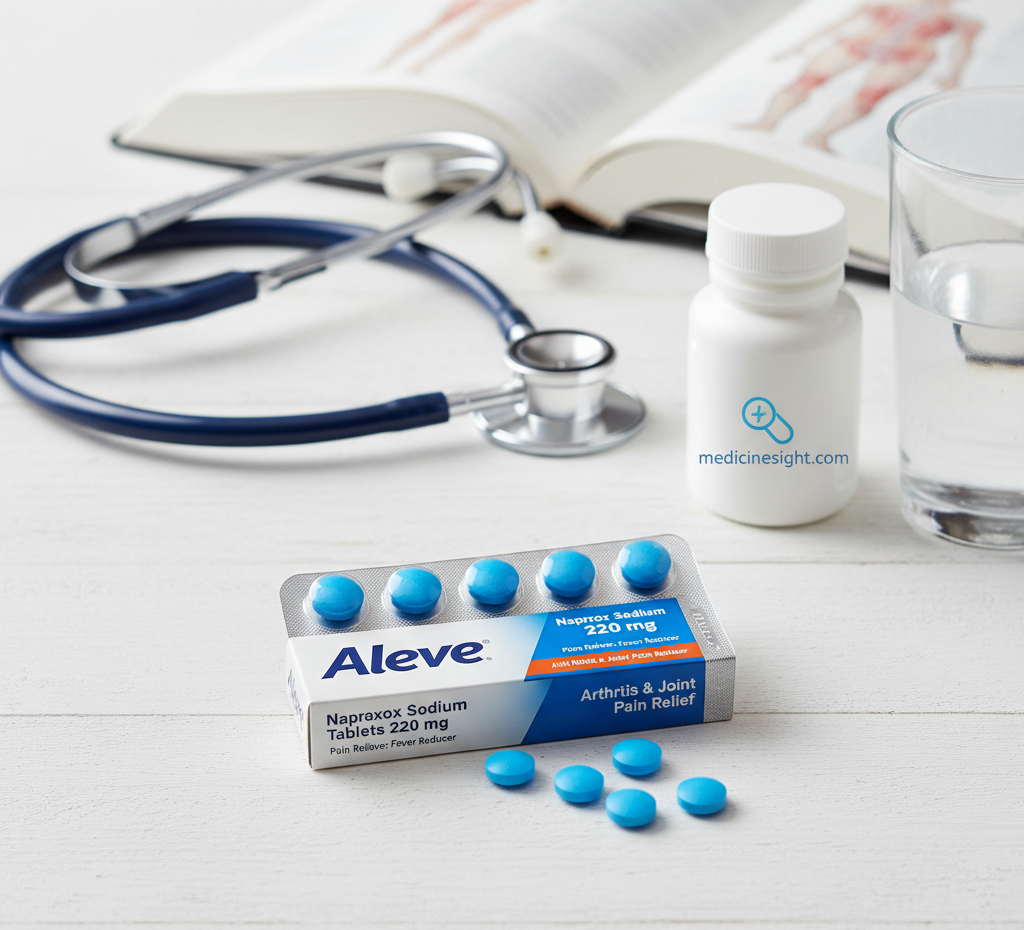
An Entire Guide to Deal & Treating Arthritis and Musculoskeletal Pain with Naproxen (Aleve)
Naproxen, often known by its over-the-counter (OTC) brand name Aleve, is a vital drug for treating fever, inflammation, and pain. It is an effective treatment for a wide range of ailments, from common headaches and muscle pains to chronic, incapacitating illnesses like arthritis, because it relates to the Nonsteroidal Anti-Inflammatory Drug (NSAID) category. Each thing a patient or researcher needs to know about this multipurpose tablet is covered in this comprehensive guidelines, which has been tailored for accuracy and thorough comprehension. This includes information on its mechanism, how to use it correctly, vital dose requirements, and important safety matters. In order to be a trustworthy source of health and correct information, Medicinesight strives to offer genuine content that addresses every facet of this necessary drug, guaranteeing that patients are knowledgeable about how to use Naproxen for efficient pain management and inflammation control.
Significant the Therapeutic Class and Mechanism of Action of Naproxen
Naproxen, a chemical derivative of propionic acid, functions by blocking particular enzymes in the body. Its major mechanism of action is to inhibit the activity of the cyclooxygenase (COX) enzymes, particularly COX-1 and COX-2. These enzymes are in charge of producing prostaglandins, which are lipid molecules that play a special role in the mediation of fever, inflammation, and pain. Naproxen advantageously suppresses the inflammatory response and eases related pain by lowering prostaglandin synthesis. Although it inhibits both COX enzymes and is categorized as a non-selective NSAID, its longer half-life than that of other popular over-the-counter pain medications, such as ibuprofen, permits less frequent dosing, usually every 08 to 12 hours. It is the exact option for managing chronic arthritic pain because of its prolonged effect, which is specially advantageous for chronic illnesses. To understand why Naproxen works so well to treat inflammatory diseases, one must have a basic understanding of its mechanism.
Administration and Dosage How Much Time to Take for the Most Comfort
The formulation (Naproxen sodium vs. Naproxen base) and whether Naproxen is being taken over-the-counter or with a prescription determine the exact dosage. Naproxen sodium 220 mg is usually the OTC formulation (Aleve). Adults often take two 440 mg pills for initial pain, then one 220 mg tablet every 08 to 12 hours as needed. Importantly, unless a doctor instructs you otherwise, the maximum daily dosage of over-the-counter naproxen sodium is 660 mg (three tablets) in a 24-hour period. For prescription use, the drug is designed to treat chronic illnesses such as severe osteoarthritis or rheumatoid arthritis, with dosages ranging from 250 mg to 500 mg and from time to time more. For chronic diseases, the daily highest prescribed dosage frequently falls between 1000 and 1500 mg. Naproxen must always be taken with food or milk, regardless of dosage, to reduce the possibility of stomach irritation and gastrointestinal distress. In order to gain their treatment objectives, patients should always take the least amount of medication for the shortest amount of time.
Types & Differences Instantaneous vs. Delayed Release
There are many formulations of naproxen available, each of which is intended to provide the best possible care for many patient requirements and ailments. The most typical types are:
Aleve and Naprosyn are examples of immediate-release (IR) tablets, which dissolve rapidly in the stomach and provide instant pain relief for headaches, menstrual cramps, and severe injuries.
Enteric-coated (EC) or delayed-release (DR) tablets, like that of Naprosyn EC and Naproxen EC: Because of their unique layers, these tablets do not dissolve until they get to the small intestine. Patients who used long-term care for chronic illnesses like rheumatoid arthritis would especially benefit from this delayed action. By avoiding the stomach and greatly lowering the possibility of direct gastric irritation, the enteric coating helps shield the stomach lining from possible harm. This version is more appropriate for maintenance therapy than for acute pain episodes due to its later onset of effect. Patients can choose the best formulation for their pain management approach if they are aware of these variances.
Therapeutic Applications Addressing Musculoskeletal Pain and Arthritis
Naproxen is incredibly successful at treating disorders that call for long term analgesic and anti-inflammatory effects because of its extended activity. Although mild to moderate pain alleviation is its main indication, chronic inflammatory illnesses are where it really shines. It is a first-line treatment for a number of arthritis types, such as rheumatoid arthritis, a systemic inflammatory disease that causes inflammation in the joints, and osteoarthritis, which is characterized by joint degradation. Naproxen is also frequently recommended for:
Relieving youngsters with inflammatory joint condition is known as juvenile arthritis.
Reducing spinal pain and inflammation in ankylosing spondylitis.
Dealing inflammation of tendons and fluid-filled sacs close to joints is known as tendinitis or bursitis.
Acute Gout Flares: Controlling the intense pain of a gout attack with a strong anti-inflammatory effect.
Because it can prevent the formation of prostaglandins, a major cause of menstrual discomfort and uterine contractions, it is very successful in treating dysmenorrhea, or period cramps.
Basic Safety Factors and Risk Reduction
The U.S. FDA has issued a Boxed Warning to draw attention to the serious safety concerns associated with Naproxen, which are present with all NSAIDs. The 2 primary risks highlighted in this warning are gastrointestinal (GI) bleeding and cardiovascular (CV) events. With usage of high dosages, NSAIDs, such as Naproxen, may raise the risk of myocardial infarction (MI), stroke, and major CV thrombotic events. Patients who already have cardiac disease are at higher risk. Naproxen may also result in severe gastrointestinal side effects, such as ulcers, bleeding, inflammation, and intestinal or stomach rupture.
To lessen these dangers:
Low Potency Dose, Shortest Time: Take the smallest dose essential for the shortest amount of time.
Always take with food, milk, or an antacid to protect the stomach.
Avoid in Specific Conditions: It is not recommended for usage in the third trimester of pregnancy and is frequently contraindicated in individuals who have had recent coronary artery bypass graft (CABG) surgery or who have significant liver or kidney illness.
Drug Interactions: Because naproxen can raise the risk of bleeding or decrease the effectiveness of blood thinners (such as warfarin or aspirin), diuretics, or some antidepressants, patients should let their doctor know if they take these medications.

Common Side Effects and Observation
Naproxen frequently causes gastrointestinal side effects, such as heartburn, indigestion (dyspepsia), nausea, and stomach pain, however these are commonly well tolerated when taken as doctor recommendation . Fluid retention, edema, high blood pressure, and indications of liver or renal problems are less frequent but more dangerous side effects. If a patient has symptoms such as black or tarry stools, coffee-ground vomit (an indication of gastrointestinal bleeding), sudden chest pain, shortness of breath, or unexplained weight gain (a sign of cardiac problems), they should be encouraged to get medical help right once. For patients receiving long time, high dose Naproxen therapy, routine monitoring of blood pressure, kidney function (creatinine levels), and liver enzymes is frequently advised. Safe, long-term use depends on patient adherence to monitoring procedures.
In conclusion, naproxen is a crucial pain reliever.
Millions of people with acute injuries and chronic diseases, including arthritis, benefit from naproxen’s consistent and long-lasting effects, making it a vital tool in the medical toolbox for managing pain and inflammation. It is a practical and convenient choice due to its twice-daily dosage schedule. But given the possible hazards to the heart and gastrointestinal tract, its efficacy needs to be weighed against prudence. Before beginning a long-term regimen or taking Naproxen with other medications, patients should always speak with their healthcare provider. They should also carefully follow the recommended dosages and duration. One of the most dependable NSAIDs for enhancing quality of life by successfully reducing pain is Naproxen (Aleve), when taken as directed by a doctor.
Frequently Asked Questions (Q&A)
Q1: Is Naproxen a blood thinner, and can I take it with low-dose aspirin?
A: Naproxen is not a true blood thinner (anticoagulant) like warfarin, but it does have anti-platelet effects, meaning it inhibits blood clotting. Taking Naproxen with low-dose aspirin (often prescribed for cardiac protection) can increase the risk of gastrointestinal bleeding. Patients must consult their cardiologist or physician before combining these medications, as the benefits of cardiac protection versus the risk of bleeding need careful assessment.
Q2: How long does it take for Naproxen to start working, and when should I switch to a delayed-release form?
A: Naproxen sodium (Aleve, immediate-release) typically begins to provide pain relief within 30 to 60 minutes, with peak effects around 2 to 4 hours. You should switch to a delayed-release (EC) form if you are diagnosed with a chronic condition like osteoarthritis or rheumatoid arthritis and require treatment for several months or years. The delayed-release form is chosen to reduce long-term risk of stomach ulcers and is better suited for maintenance therapy than acute flares.
Q3: What is the main difference between Naproxen (Naprosyn) and Naproxen Sodium (Aleve)?
A: Naproxen (the base form) and Naproxen Sodium (the salt form) contain the same active ingredient, but the sodium salt form is absorbed slightly faster by the body. This difference allows Naproxen sodium to be marketed as a quick-acting OTC product (Aleve 220 mg). The Naproxen base is typically reserved for higher-dose prescription formulations. From a researcher’s perspective, Naproxen sodium provides a slightly earlier peak plasma concentration.
Q4: Can long-term Naproxen use affect my kidneys?
A: Yes. Like other NSAIDs, chronic, high-dose use of Naproxen can impair kidney function. The kidneys rely on prostaglandins to regulate blood flow. By inhibiting prostaglandin synthesis, Naproxen can reduce blood flow to the kidneys, potentially leading to fluid retention and, in susceptible individuals (like the elderly or those with pre-existing kidney disease), acute kidney injury. Regular monitoring of kidney function (e.g., blood tests for creatinine) is essential for patients on long-term therapy.
Leave a Reply