
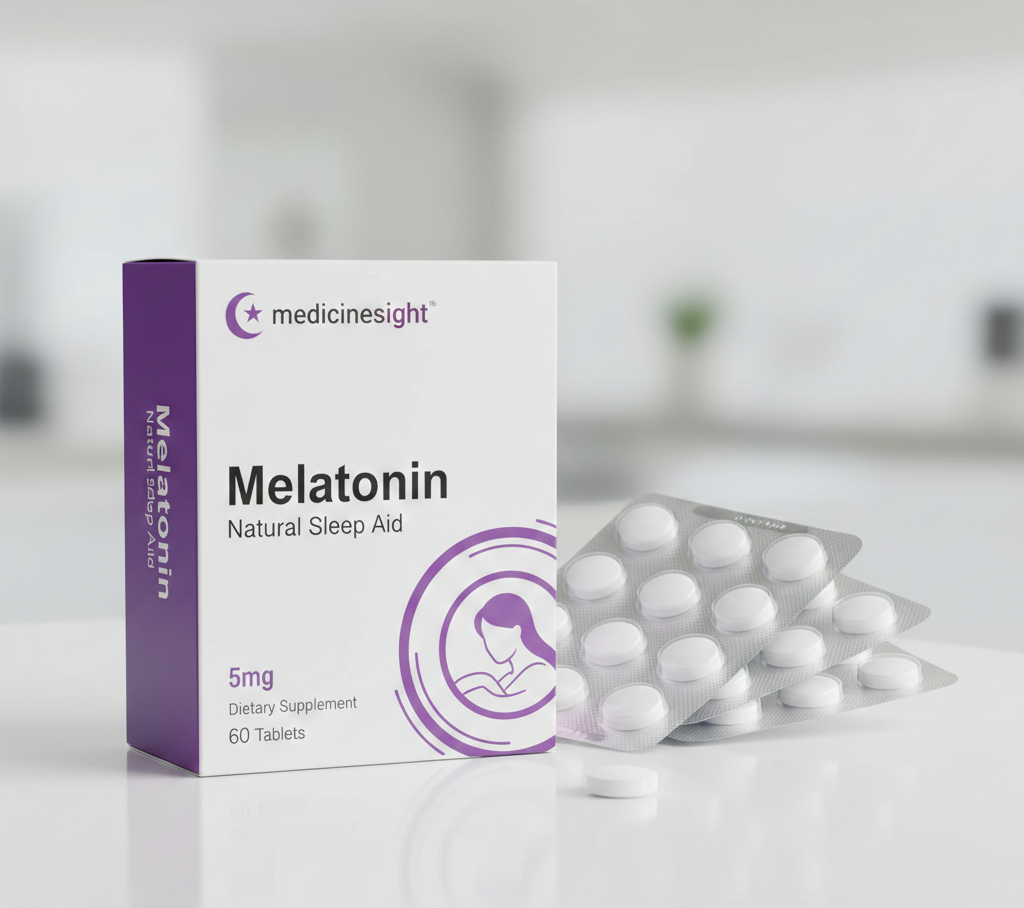
In today’s fast-paced world, getting peaceful sleep has become harder than ever. Late-night screen use, work pressure, and daily stress commonly disturb our natural sleep schedule. Because of this, many people turn to Melatonin, a well-known and natural sleep help, to help reset their sleep routine. At medicinesight, we aim to share reliable and easy-to-understand information about supplements and medicines. This information explains what Melatonin is, how it works, how to use it properly, and what you should know about its safety so you can make better choices for healthier sleep.
How Melatonin Helps You Sleep
Melatonin is not a sleeping pill. It is a hormone that your body already makes naturally in the brain. It is commonly called the “darkness hormone” because it is released when it gets dark outside. As night approaches, Melatonin levels high and tell your body that it’s time to sleep. In the morning, light reduces Melatonin production and helps you wake up. This cycle controls your circadian rhythm, which is your body’s internal 24-hour clock. Melatonin supplements work by copying this natural signal. When you take a tablet, it increases Melatonin levels in your blood and gently encourages your body to fall asleep. Unlike strong sleeping medications, Melatonin does not force sleep or shut down brain activity. Instead, it supports your body’s natural sleep timing.
Uses of Melatonin Beyond Basic Sleep Problems
Melatonin is best known for helping with sleep, but it is especially useful for sleep issues caused by a disturbed body clock. Common uses include:
Trouble falling asleep (Insomnia):
Melatonin can help people who take a long time to fall asleep, especially older adults whose natural Melatonin levels may be lower.
Jet lag:
Traveling across time zones confuses the body clock. Taking Melatonin at the right time after arrival can help the body adjust faster.
Shift work sleep problems:
People who work night shifts or rotating schedules often struggle to sleep during the day. Melatonin can improve sleep quality in these situations.
Delayed Sleep Phase Syndrome (DSPS):
Some people naturally feel sleepy very late at night and wake up late in the morning. Low-dose Melatonin taken at the right time can help shift sleep earlier.
Researchers are also studying Melatonin for its possible antioxidant and anti-inflammatory benefits, but these uses are still being explored.
How to Use Melatonin Correctly
Using Melatonin the right way is important. More is not always better.
Typical doses:
Melatonin tablets usually come in doses from 1 mg to 10 mg, but most people do not need high doses.
For falling asleep:
Start with 0.5 mg to 3 mg, taken about 30 to 60 minutes before bedtime. This allows the hormone to work as your body prepares for sleep.
For jet lag:
A dose between 0.5 mg and 5 mg is common. Take it near bedtime in the new time zone for a few days after arrival.
How to take it:
- Take Melatonin at the same time every night
- Avoid taking it on a very full stomach
- Extended-release tablets may help people who wake up too early
- Never take it before driving or using machinery
Melatonin is usually meant for short-term use. Long-term use should only be done with medical guidance.
Safety, Side Effects, and Warnings
Melatonin is generally safe for most adults when used properly. However, some people may experience mild side effects, especially with higher doses.
Common side effects include:
- Feeling sleepy the next day
- Headache or dizziness
- Upset stomach
- Vivid dreams or nightmares
Who should be cautious:
- Pregnant or breastfeeding individuals
- People with autoimmune conditions
- Anyone taking prescription medications
Melatonin can interact with blood thinners, diabetes medications, and immune-suppressing drugs. Alcohol should also be avoided, as it can increase drowsiness.
Always consult a healthcare provider before starting Melatonin if you are on medication or have a medical condition.
Choosing a Good-Quality Melatonin Supplement
Because Melatonin is sold as a dietary supplement, quality can vary. Choose products that are third-party tested for safety and accuracy. Certifications such as USP or NSF indicate better quality control.
Also check:
- Ingredient source
- Accurate dosage labeling
- Dietary suitability (vegan, gluten-free, etc.)
When You Should See a Doctor
Speak to a healthcare professional if:
- Your sleep problem may be caused by another condition (like sleep apnea)
- Side effects are severe or persistent
- Melatonin does not help after several weeks
- You plan to use it longer than one month
Melatonin and Overall Well-Being
Healthy sleep affects mood, focus, immunity, and metabolism. Melatonin can be a helpful and non-habit-forming tool for restoring a healthy sleep rhythm when used correctly.
It works best when combined with good sleep habits, such as:
- Keeping a consistent sleep schedule
- Reducing screen time at night
- Sleeping in a dark, quiet, and cool room
When used wisely, Melatonin can turn restless nights into refreshing sleep.
Common Questions About Melatonin
Q: Is Melatonin addictive?
No. Melatonin does not cause addiction or withdrawal. However, if the sleep problem is still present, symptoms may return after stopping.
Q: Can Melatonin treat snoring or sleep apnea?
No. Melatonin does not treat sleep apnea and may worsen symptoms in some people. A sleep specialist should evaluate these conditions.
Q: Is 10 mg better than 3 mg?
Usually not. Doses above 5 mg rarely improve sleep and often cause side effects. Lower doses are often more effective.
Q: How fast does Melatonin work?
Most people feel its effects within 20 to 60 minutes, which is why it’s taken shortly before bedtime.Q: Is long-term use safe?
Long-term safety data is limited, especially for children. Extended use should always be monitored by a doctor.
Leave a Reply