
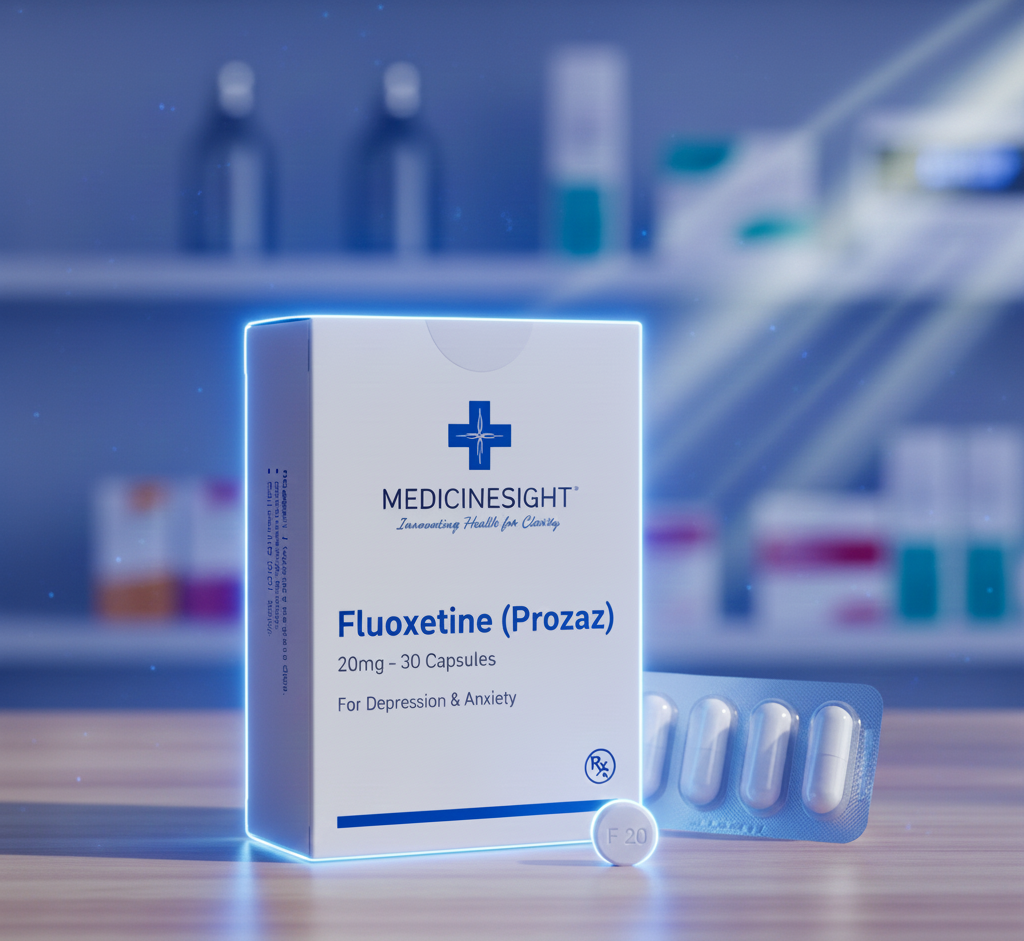
Welcome to medicinesight, a website where you can find clear, authentic and exact information on commonly used medicines. Fluoxetine, mainly known by the brand name Prozac, is one of the highly used antidepressants in the globe. It changed the method, depression is treated by offering an authentic and more focused option compared to before antidepressants. Fluoxetine isn’t a “quick cure.” Instead, restore balance in the brain, slowly slowly it works, giving people the support they need while they work on therapy, lifestyle changes, and many parts of their brain health. This way breaks down what Fluoxetine does, how to use it safely, and what to expect response while taking it.
1. What Fluoxetine (Prozac) Is & How It Helps Depression
Fluoxetine relates to a group of medicines called SSRIs (Selective Serotonin Reuptake Inhibitors). More than 100 lacs of people take it daily to help to treat the Major Depressive Disorder (MDD).
Depression often comes with symptoms like:
- Persistent sadness
- Losing interest in usual activities
- Changes in appetite or sleep
- Low energy
- Trouble concentrating
Fluoxetine assists by putting right chemical imbalances in the brain that contribute to these symptoms. It works best when used along with therapy or counseling.
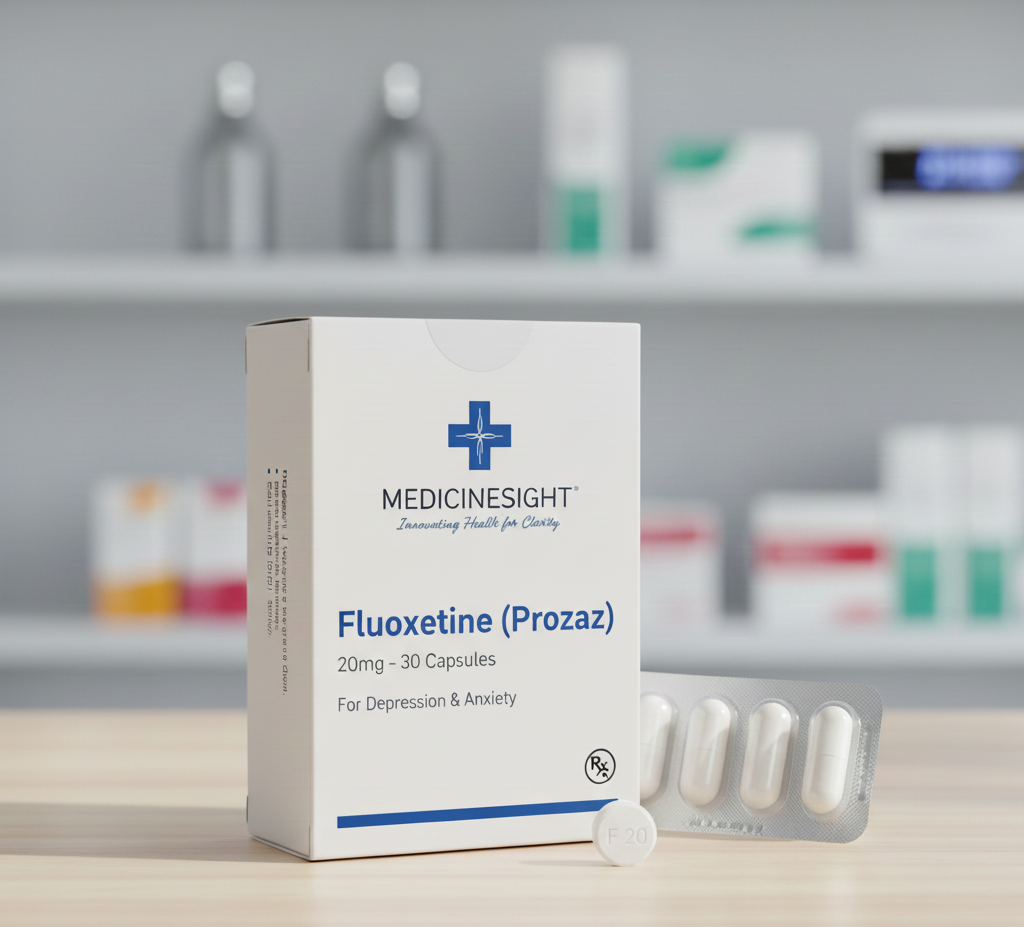
2. How Fluoxetine Works in the Brain
Serotonin is a chemical that assists control mood, sleep, and appetite. People with depression commonly have down serotonin levels. Fluoxetine high the amount of serotonin present in the brain by preventing it from being reabsorbed too rapidly. This allows nerve cells to communicate more successfully, which gradually lifts mood and balances emotional symptoms. Because it focuses mostly on serotonin, Fluoxetine commonly causes fewer heart and anticholinergic side effects compared to older antidepressants.
3. How to Take Fluoxetine Correctly
Fluoxetine comes in tablets, capsules, liquid form, and a once-weekly capsule.
Typical Dose for Depression
- Starting dose: 20 mg once daily (usually in the morning)
- Maintenance dose: 20–40 mg per day
- Maximum dose: 80 mg per day
The dose is usually increased slowly, depending on how someone responds.
You can take it both ways with or without food, but it’s important to take it around the same time each day. Never stop Fluoxetine suddenly without talking to your doctor, as it can cause uncomfortable symptoms.
4. Other Conditions Fluoxetine Treats
Besides depression, Fluoxetine is also approved for:
- OCD (Obsessive-Compulsive Disorder) – often higher doses needed
- Bulimia Nervosa – usually 60 mg daily
- Panic Disorder
- PMDD (Premenstrual Dysphoric Disorder) – taken daily or only during the luteal phase
- Bipolar I depression (when combined with Olanzapine as Symbyax)
When Does It Start Working?
- Sleep, appetite, and energy may improve in 2–4 weeks
- Mood improvement may take 6–12 weeks
Consistency is key results take time.
5. Important Safety Warnings
Black Box Warning: Suicidal Thoughts
All antidepressants, including Fluoxetine, have an FDA Black Box Warning. People under 24 may experience high suicidal thoughts when starting the medicine or changing the dose. Close monitoring is important during this period. Adults 24+ have lower risk, and people over 65 may actually have better protection.
Serotonin Syndrome
A rare but serious condition caused by too much serotonin.
Symptoms include:
- High fever
- Agitation
- Fast heart rate
- Tremors
- Sweating
- Confusion
Seek medical help immediately if these happen.
6. Common Side Effects & Drug Interactions
Many side effects fade as the body adjusts.
Common Side Effects
- Nausea or diarrhea
- Dry mouth
- Headaches
- Insomnia or nervousness
- Reduced libido
- Difficulty with orgasm or ejaculation
- Early weight loss, sometimes later weight gain
Morning dosing may help reduce nighttime insomnia.
Important Drug Interactions
Because Fluoxetine stays in the body for a huge time, interactions can occur even weeks after stopping it.
Avoid or use caution with:
- MAOIs – never combine these
- Other serotonin-boosting drugs (Triptans, Tramadol, Lithium, St. John’s Wort)
- Blood-thinners like NSAIDs, Aspirin, Warfarin – increased bleeding risk
7. Long-Term Use & Stopping the Medication Safely
People commonly continue Fluoxetine for at least 180-365 days after symptoms improve. Some need longer treatment depending on their condition. Because Fluoxetine leaves the body slowly, withdrawal symptoms are less intense than with other SSRIs, but tapering is still recommended to avoid:
- Irritability
- Anxiety
- Dizziness
- “Brain zaps”
Always reduce the dose under medical supervision.
Frequently Asked Questions (FAQ)
1. Is Fluoxetine addictive?
No. It does not cause cravings or drug-seeking behavior. But your body does adjust to it, so stopping suddenly can cause discomfort—which is why tapering is important.
2. How long does Fluoxetine stay in the body?
It has a long half-life:
- Fluoxetine: 4–6 days
- Norfluoxetine (its active form): 4–16 days
Because of this, some people use Prozac Weekly (90 mg), which is taken only once per week.
3. Can I drink alcohol or use cannabis while taking Fluoxetine?
Alcohol can worsen depression and make side effects stronger.
Cannabis can interact unpredictably and may worsen anxiety or other symptoms.
It’s best to discuss both with your doctor.
4. Does Fluoxetine cause long-term sexual problems (PSSD)?
Most sexual side effects go away after stopping the medicine.
However, rare cases of Post-SSRI Sexual Dysfunction (PSSD) have been reported. This is uncommon but worth discussing with your healthcare provider if it concerns you.
Leave a Reply