
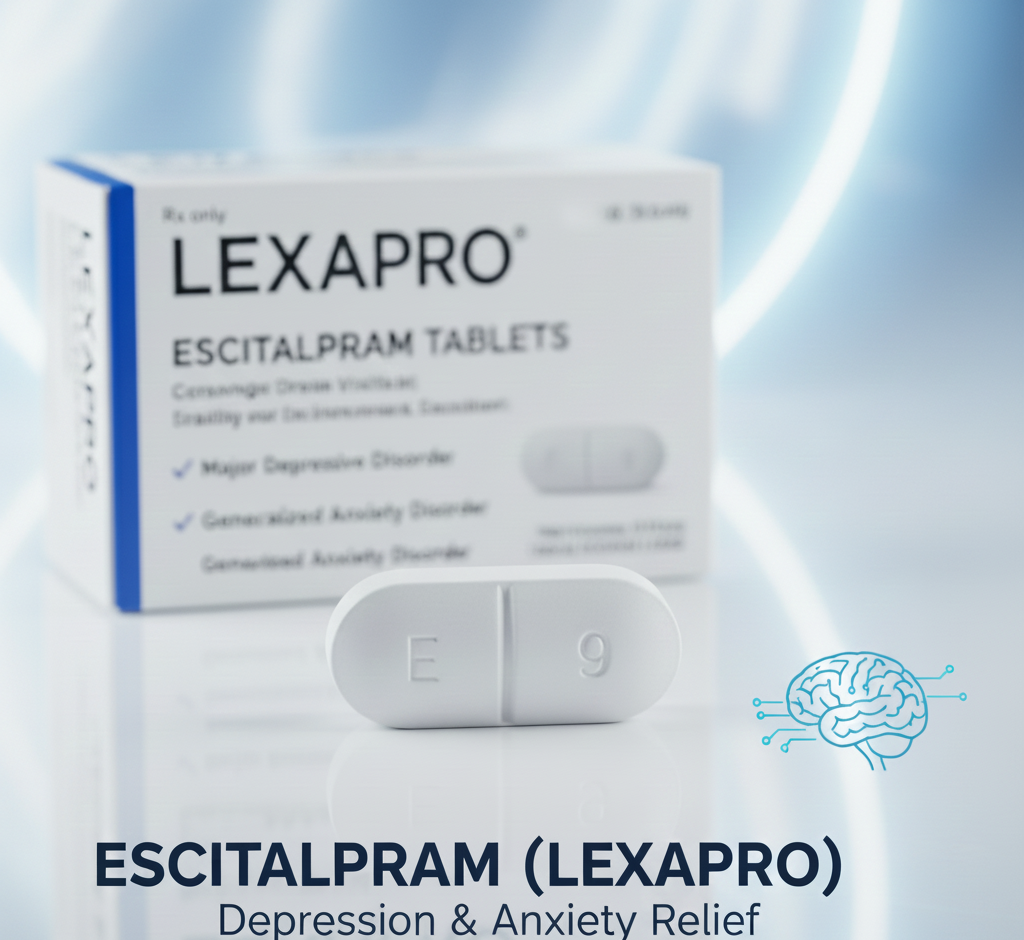
What Escitalopram Is and How It Works?
Escitalopram, commonly known by its brand name Lexapro, is a normal medication used to treat depression and generalized anxiety. Doctors suggested it because it helps balance your mood and ease constant issues & worries. It relates to a group of medicines called SSRIs (Selective Serotonin Reuptake Inhibitors). In simple words, SSRIs help your brain hold on to more serotonin, the chemical that helps to maintain mood, sleep, appetite, and emotional stability. When the brain has more serotonin available, people commonly start to feel calmer, more stable, and more like themselves again. Escitalopram does this by slowing down the brain’s natural process of “reabsorbing” serotonin. With the passage of time, this boost helps lift depression and reduce anxiety symptoms.
How to Take It (Dosage & Use)
Escitalopram is commonly taken one time in a day, and you can take it with or without food. Most adults start at 10 mg daily, and some may have increased their dose later. The maximum common dose is 20 mg a day, but only a doctor should take that decision. Older adults or patients with liver problems commonly stay on a lower dose because their bodies process the medicine more slowly. Never change your dose without the doctor’s permission. The medication comes in 5 mg, 10 mg, and 20 mg tablets so your doctor can manage it carefully when necessary.
When You’ll Feel a Difference
It does not work all night. Most people start noticing small improvements, peacefull sleep, more energy, improved appetite within 1–2 weeks. The full results commonly appear after 4–8 weeks, which is when mood, motivation, and anxiety symptoms show noticeable improvement. For depression, people commonly regain interest in daily life and feel more emotionally stabilized. For anxiety, the constant worrying, restlessness, and physical tension slowly begin to fade. Even when you feel better, continuing the medication helps prevent the symptoms from returning.
Common Side Effects (Usually Temporary)
Most side effects are mild and often go away after your body adjusts. The most common ones include:
- Stomach issues: nausea, diarrhea, dry mouth
- Sleep or energy changes: trouble sleeping or feeling extra sleepy, dizziness, tiredness
- Increased sweating
- Sexual side effects: lower sex drive, delayed ejaculation, or difficulty reaching orgasm
If any side effect feels too restless, your doctor may adjust the timing of your dose or suggest other solutions. Sexual side effects may need dose adjustments or switching medication.
Serious Warnings You Should Know
Although Escitalopram is generally safe, there are a few important risks your doctor will monitor:
1. Increased suicidal thoughts in younger people
Teens and young adults (up to age 24) may experience increased restlessness or suicidal thoughts in the early weeks of treatment or after a dose change. Family members should watch for sudden mood or behavior changes.
2. Serotonin Syndrome
This happens when there’s too much serotonin in the body. It’s rare but serious. Symptoms include:
- Fever
- Agitation
- Fast heartbeat
- Hallucinations
- Severe nausea or diarrhea
This is more likely if you take other medications that also affect serotonin.
3. Low sodium levels (Hyponatremia)
Common in older adults. It may cause headache, confusion, or weakness.
4. Heart rhythm issues (QT prolongation)
Rare but serious, especially for those with existing heart conditions.
5. Angle-closure glaucoma risk
Can trigger an eye pressure attack in people with untreated narrow-angle glaucoma.
Drug Interactions You Must Avoid
Escitalopram should never be combined with MAOIs like Selegiline or Phenelzine. The combination can be life-threatening. A full 14-day gap is required when switching.
Use caution with:
- Other serotonin-increasing drugs (e.g., triptans, Tramadol, St. John’s Wort, Lithium)
- Blood thinners such as Aspirin, Warfarin, or NSAIDs
- Medications that affect heart rhythm
Always tell your doctor about all medications, vitamins, and herbal supplements you use.
Stopping Escitalopram Safely
Do not stop this medication suddenly. Doing so can cause discontinuation syndrome, which may include:
- Dizziness
- “Brain zaps” (electric-shock sensations)
- Nausea
- Irritability
- Headaches
- Vivid dreams
Doctors usually create a slow tapering plan so your brain adjusts gradually. Even if you feel completely fine, always taper under medical guidance.
Quick Q&A
Is Escitalopram addictive?
No. It doesn’t cause cravings or drug-seeking behavior. But stopping it too fast can cause withdrawal-like symptoms, which is why tapering is necessary.
Does it cause weight gain?
It can, but not for everyone. Some people stay the same, some gain a little, and some lose weight initially. Often, weight gain is related to appetite returning as depression improves.
How long will I need to take it?
For a first episode of depression, treatment usually continues 6–12 months after symptoms improve. People with repeated depression or chronic anxiety may need longer-term treatment.
Can I drink alcohol while taking it?
It’s better to limit or avoid alcohol. Alcohol can worsen depression and anxiety and may increase drowsiness or dizziness when combined with Escitalopram.
How is Escitalopram different from Citalopram?
Escitalopram is a more refined version (the active part) of Citalopram. Because of that, it often works well at lower doses and may have fewer side effects.
Leave a Reply