

What Is Alprazolam and Why Is It Used?
Alprazolam, commonly known as Xanax, is a fast working medicine from the benzodiazepine family. Doctors commonly prescribe it for short time period relief from strong anxiety or panic attacks. Many other anxiety medicines need weeks to start working, but Xanax can calm symptoms much faster. Because of this quick effect, it’s formally used when a patient needs relief rapidly. However, it also increases the risk of dependence, which is why doctors are very careful with the dose and how long you take it.
How Xanax Works Inside the Brain?
To know Xanax, think of it as something that helps “slow down” a heavy brain. It works by increasing a chemical called GABA, which naturally helps us feel calm and peaceful. When GABA activity increases, the brain sends fewer “stress signals,” which leads to reduced anxiety, less muscle tension, and an overall calming effect. For panic attacks, the rapid action of Xanax is helpfull for stopping symptoms before they get critical damage. For general anxiety, it helps control the constant feeling of worry while longer-term treatments (like therapy or SSRIs) begin to work.
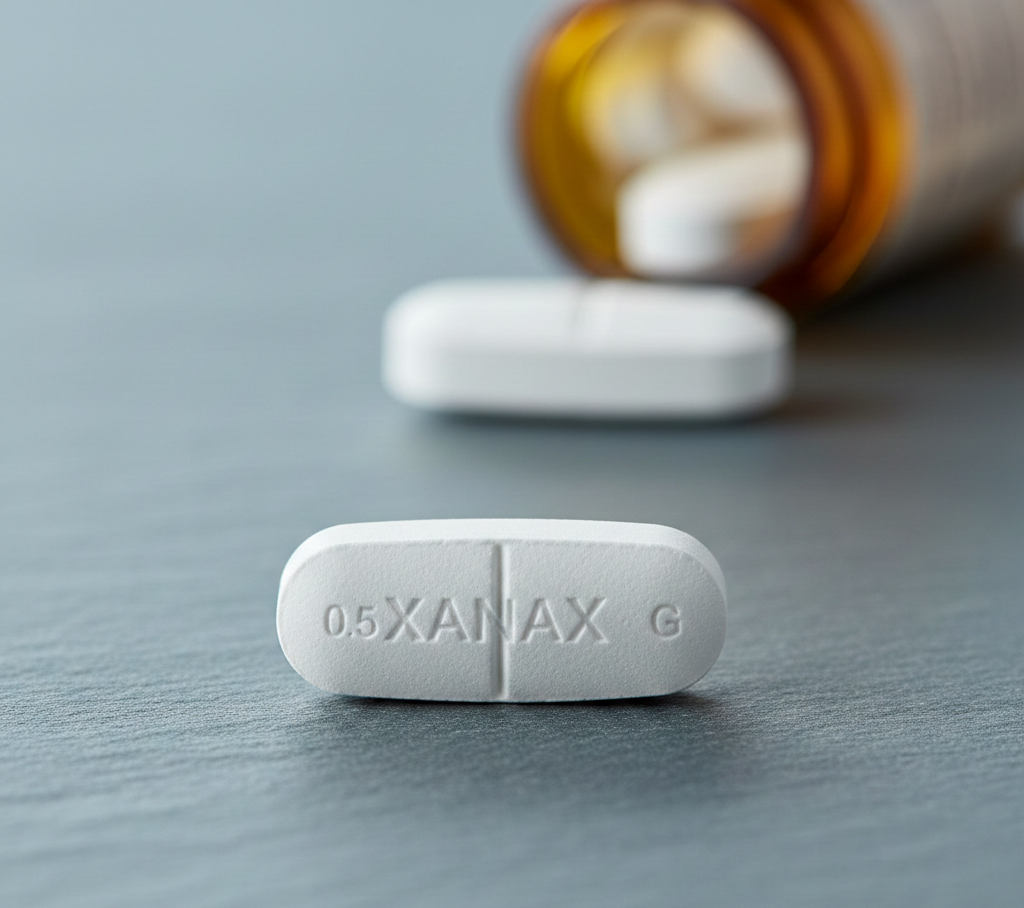
How to Take Xanax Safely, Dosage and Guidelines
The exact dose of Alprazolam varies from patient to patient. A doctor chooses the quantity based on symptoms, age, and how your body reacts to the medicine. Never change your dose by yourself.
Typical dosing examples:
- General Anxiety Disorder (GAD): usually starts at 0.25–0.5 mg, taken 2–3 times a day.
- Panic Disorder: doses may be higher (0.5–4 mg per day), sometimes in extended-release form (Xanax XR).
Important reminders:
- Swallow tablets whole.
- Extended-release (XR) tablets must not be crushed or chewed; doing so can release too much medicine at once.
- Treatment is usually short term to avoid dependence.
Side Effects, Precautions, and Drug Interactions
Like all medications, Xanax has possible side effects. The common ones include:
- Sleepiness
- Dizziness
- Memory issues
- Slowed coordination and reaction time
The FDA has issued a serious warning about taking Xanax with opioid painkillers (like oxycodone or hydrocodone). This combo can slow breathing dangerously and may be life-threatening.
Xanax should also be avoided in:
- People with acute narrow-angle glaucoma
- Anyone allergic to benzodiazepines
- Elderly patients (higher risk of falls and confusion)
Some medications, especially strong CYP3A inhibitors (certain antifungals or HIV drugs), can prevent Xanax from breaking down in the body, causing harmful buildup.
Dependence & Withdrawal, Why Stopping Xanax Suddenly Is Dangerous
One of the biggest concerns with Xanax is dependence. Over time, your body can get used to it, meaning:
- Tolerance: you need more to get the same effect
- Dependence: your body “expects” the drug to function normally
If someone stops Xanax suddenly, they may experience withdrawal symptoms such as:
- Strong rebound anxiety
- Trouble sleeping
- Irritability
- Confusion
- Hallucinations
- Even seizures in severe cases
For this reason, Xanax must be stopped slowly and carefully under a doctor’s supervision using a tapering schedule.
Xanax as Part of a Complete Anxiety Treatment Plan
Xanax is not a advantageable for anxiety or panic disorder. Instead, it’s a short-term tool to help manage tough symptoms. Long-term recovery usually requires a combination of:
- Therapy (especially CBT)
- Lifestyle changes (exercise, better sleep, stress management)
- Non-addictive medications (like SSRIs or SNRIs)
Many people use Xanax only temporarily until their main treatment plan becomes effective.
Frequently Asked Questions (FAQ)
Q1. How fast does Xanax work?
Many people feel better within 30–60 minutes after taking an immediate release pill.
Q2. What’s the difference between regular Xanax and Xanax XR?
Regular Xanax works quickly but wears off fast, so it must be taken multiple times a day.
Xanax XR releases slowly, giving steady relief throughout the day with one dose.
Q3. Is Xanax safe during pregnancy?
Generally, no. It may cause risks to the baby, especially early in pregnancy or near delivery. Pregnant women should speak with their doctor before using it.
Q4. What if I forget to take my dose?
Take it when you remember unless it’s almost time for your next dose. In that case, skip the missed one. Never double the dose.
Q5. Can you become addicted even if you take Xanax correctly?
Yes. Even when used exactly as prescribed, physical dependence can develop. That’s why doctors use it for short periods only.Q6. Can Xanax cure anxiety or panic disorder?
No. It only helps control symptoms. Real, long-term improvement usually requires therapy, lifestyle adjustments, and sometimes other medications
Leave a Reply